Small Business Marketing: 6 Proven Strategies for More Reach

Small business marketing is a mix of strategies, tactics, and channels to promote your offerings to your target customers. It’s about putting your business in the spotlight, grabbing attention, and turning that into revenue.
This guide will teach you how to market your small business using six best practices.
You’ll learn:
- How to figure out who wants what you’re selling
- How to make your business stand out from the crowd
- How to use nine effective marketing channels
Ready to cut through the noise?
Let’s begin.
1. Define Your Target Audience
It’s essential to zero in on those with a genuine interest or need for what you offer to reach your target audience. Here’s how:
Do Market Research
Market research helps you understand your target customers on a deeper level. Including their needs, challenges, preferences, and behaviors.
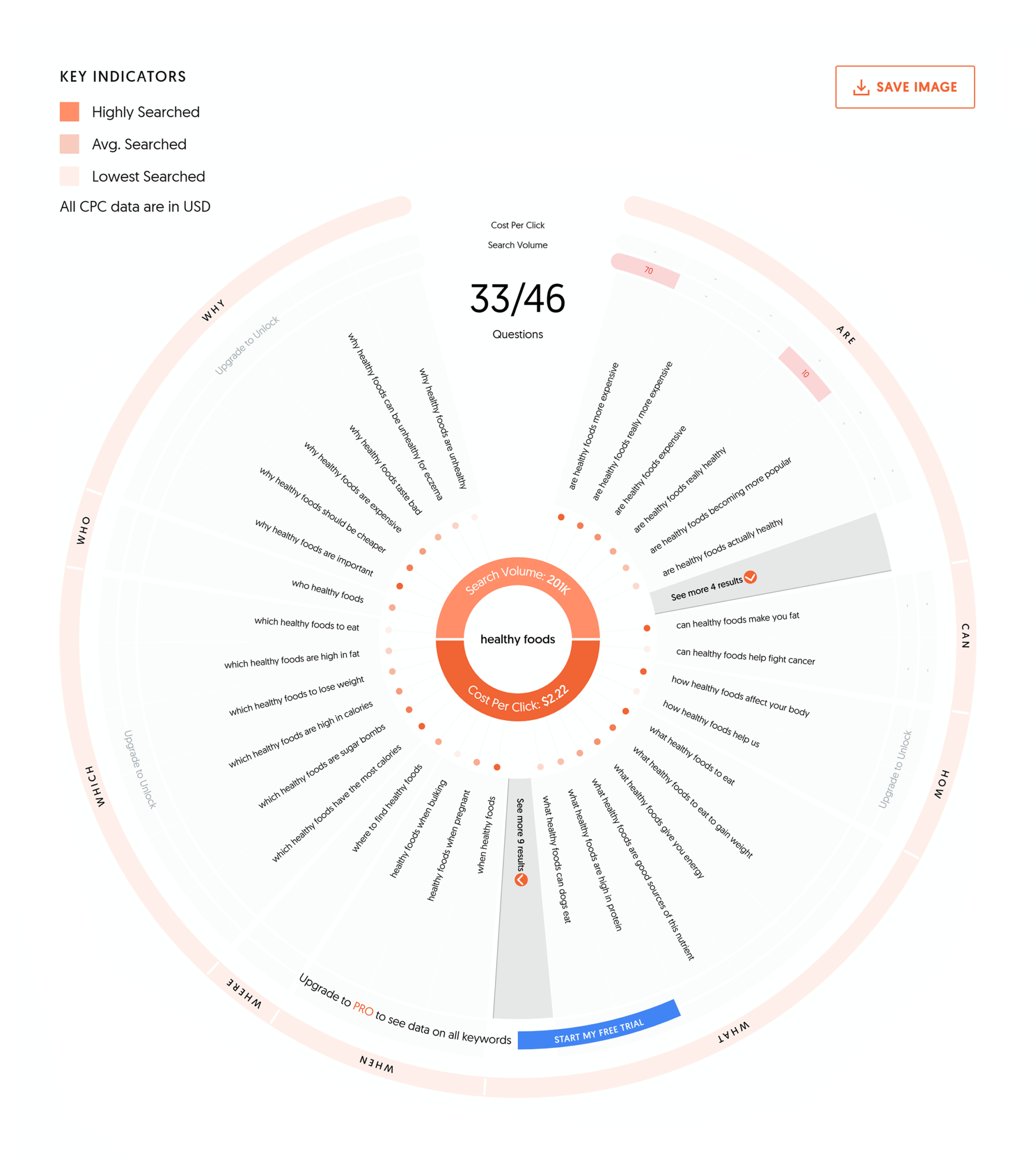
Use Answer the Public, a free social listening tool, to identify phrases people use on search engines like Google and Bing. This can help you understand audience preferences and pain points.
For example, if you search for “healthy foods,” you’ll get a list of questions people ask about the topic. Such as, “Are healthy foods more expensive?” Knowing your target audience is concerned about the cost of healthy foods gives you insight into one of their challenges.
Compile a list of phrases to gain deeper insights into your audience. And inform your marketing strategies and product offerings.
Google Analytics also helps with market research. It provides essential audience data on who visits your website. Including demographic information. Like age, gender, and location.
See what devices your audience uses, how they found your site, and which pages they spend the most time on.
Use this information to analyze who your most active online audience is.
This includes your audience’s:
- Interests and buying habits
- Pain points
- Preferred methods of communication
Create Buyer Personas
Organize your findings into buyer personas.
A buyer persona is a detailed profile of an ideal customer that helps you better understand and relate to your target audience.
It includes your customers’ demographics, behavior patterns, motivations, and goals.
Use Semrush’s free Buyer Persona tool to create personas for your target market. The tool has ready-to-use templates with customizable fields, including motivations and frustrations, to help you identify your ideal customer.
For example, we created a buyer persona for a fictional bakery’s ideal customer. And filled out details that would inform our small business marketing strategy. Like breakfast preferences and interest in loyalty programs.

Gather Customer Feedback
Refine your target audience by asking current customers about their needs, challenges, and opinions.
Use tools like SurveyMonkey or Google Forms to create surveys. Keep them short and focused to encourage responses.

For example, if you own a hair salon, you could ask the following survey questions:
- What do you look for most in a hair salon? For example, expertise, convenience, or price.
- How often do you typically get your hair cut/colored?
- What factors influence your loyalty to a hair salon? Examples: Stylist relationship, pricing, quality, etc.
Lastly, offer an incentive, like a discount or free product, to boost completion rates. Share your survey on social media and email to encourage participation.
2. Establish Your Unique Value Proposition
Differentiators, also known as unique selling propositions (USPs), are the qualities that make your business stand out from the rest.
They give customers a compelling reason to choose you over others in your market.
Here’s how you make sure they’re a core part of your business:
Identify Your Differentiators
Ask yourself what you offer that’s different or better than the competition.
Consider factors like:
- Unique products or services
- Exceptional customer service
- Expertise and experience
For example, Canadian restaurant Gyubee Japanese Grill differentiates itself by offering an all-you-can-eat Japanese barbecue experience.

Unlike typical Japanese spots, Gyubee’s menu doesn’t include sushi. It features a selection of raw proteins customers can grill at the table. Along with ready-to-eat side dishes. And a focus on high-quality, flavorful ingredients.
Like Gyubee, aim for differentiators that are relevant to your customers and defendable—aka not easily copied by competitors.
Develop Your Messaging
Make your differentiators a part of everything you do.
Highlight them in these crucial areas:
- Website and marketing copy
- Social media bios and posts
- Product descriptions and packaging
For example, Gyubee highlights its differentiators across various touchpoints.
Including its website. Which emphasizes the unique all-you-can-eat Japanese barbecue experience.

The restaurant also uses social media to highlight its differentiators. On Instagram, Gyubee posts images of meat being grilled to perfection.

Gyubee also uses video marketing to showcase menu items. Helping to engage its target market. And attract new and existing customers.

Differentiators give customers a clear reason to choose your small business over the competition.
Create a Visual Identity
Your brand’s visual identity should be a unique, memorable reflection of your business.
It includes your:
- Logo
- Color palette
- Typography
- Imagery style
A polished visual brand signals to customers that you’re credible, trustworthy, and attentive to detail.
Take baby clothes shop MiniOlie, for example.
Both its website and Instagram feed showcase a playful aesthetic.

Pastel colors, whimsical fonts, and fun imagery create a strong visual identity. That keeps the brand cohesive across marketing channels.

To create your distinct style:
- Define your brand personality
- Choose colors that align with your brand attributes. Like blue for trust or green for nature.
- Select one to two main typefaces
- Reflect your brand’s values and mood with images
- Document these choices and usage guidelines in a brand style guide
3. Set Clear Marketing Goals
Clear marketing goals direct your efforts. And help you measure success. Let’s break this down.
Define Your Business Objectives
Start by defining your key business objectives for the next six to 12 months.
Business objectives are the overarching, long-term targets you want to achieve. They guide your business’s overall direction.
Examples:
- Become the market leader in the industry
- Double revenue within 12 months
- Improve brand reputation and customer loyalty
Create Specific and Measurable Marketing Goals
Once you’ve set your objectives, brainstorm marketing goals to help achieve them.
Goals provide the context and direction for objectives. Defining your goals also helps align teams and allows for measuring success.
Use SMART goals to make them effective. Here’s what this means:
https://www.leadbuildermarketing.com/small-business-marketing-6-proven-strategies-for-more-reach/


Comments
Post a Comment